
New-device demand is only the beginning. For the used iPhone B2B market, the next signals to watch are trade-ins, premium-device supply, batch quality and real buyer demand. Apple’s September 2026 launch is now official.
Apple introduced iPhone 18 Pro and iPhone 18 Pro Max on September 9, with availability beginning September 18. It also unveiled iPhone Duo, the company’s first foldable iPhone, with pre-orders starting October 16 and availability beginning October 23.
For consumers, the immediate conversation is about the new products.
For the used iPhone wholesale market, the more interesting question is what happens next.
Before the launch, iPhonetree looked at how a new Apple product cycle could affect sourcing, testing, grading, inventory and downstream demand across the used iPhone supply chain.
Now that the products have been announced, the focus shifts from expectations to market signals.
New-Device Demand Eventually Flows Into Used-Device Supply and Demand
Demand → Trade-in → Supply → Resale A new iPhone enters the market. Older devices begin another cycle.
The question is where that cycle leads.
A successful new-device launch does more than create demand for the latest model.
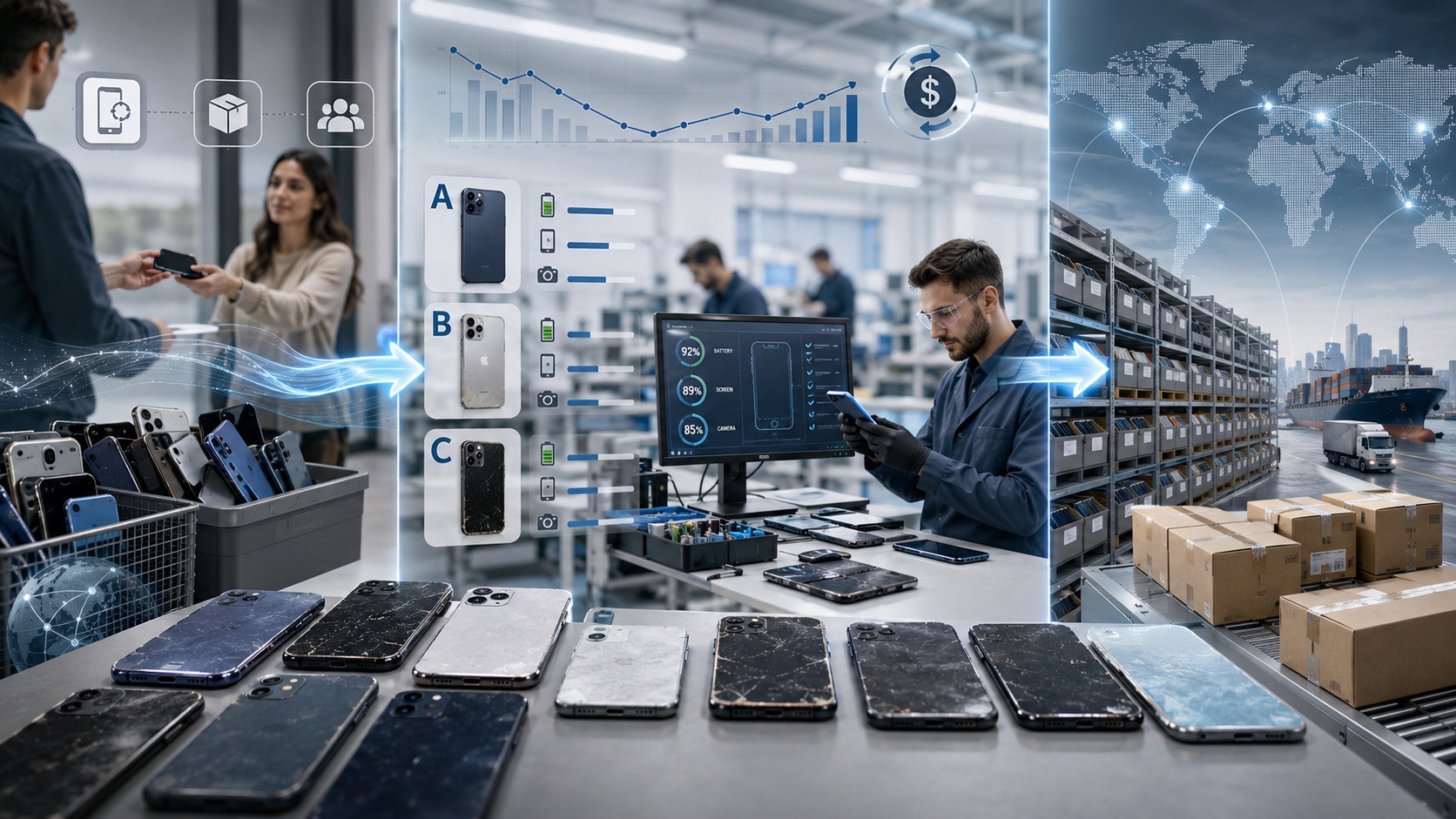
When users upgrade, existing devices may return through trade-in programmes, carrier channels, enterprise refresh cycles, recyclers and other secondary-market sources.
That process can gradually increase the supply of previous-generation devices available to the used market.
With iPhone 18 Pro and Pro Max arriving first, followed later by iPhone Duo, premium iPhone users will be one of the most important groups to watch over the coming weeks. Apple has confirmed that the Pro models begin reaching customers on September 18, while Duo availability begins on October 23.
For B2B, however, the signal is not simply: “A new iPhone has launched.”
It is: Who upgrades — and what comes back into circulation?
That is where new-product demand begins to influence used-device supply.
A launch can create enormous attention without immediately telling the wholesale market what buyers actually want.
Real Buyer Demand Matters More Than Launch-Day Hype
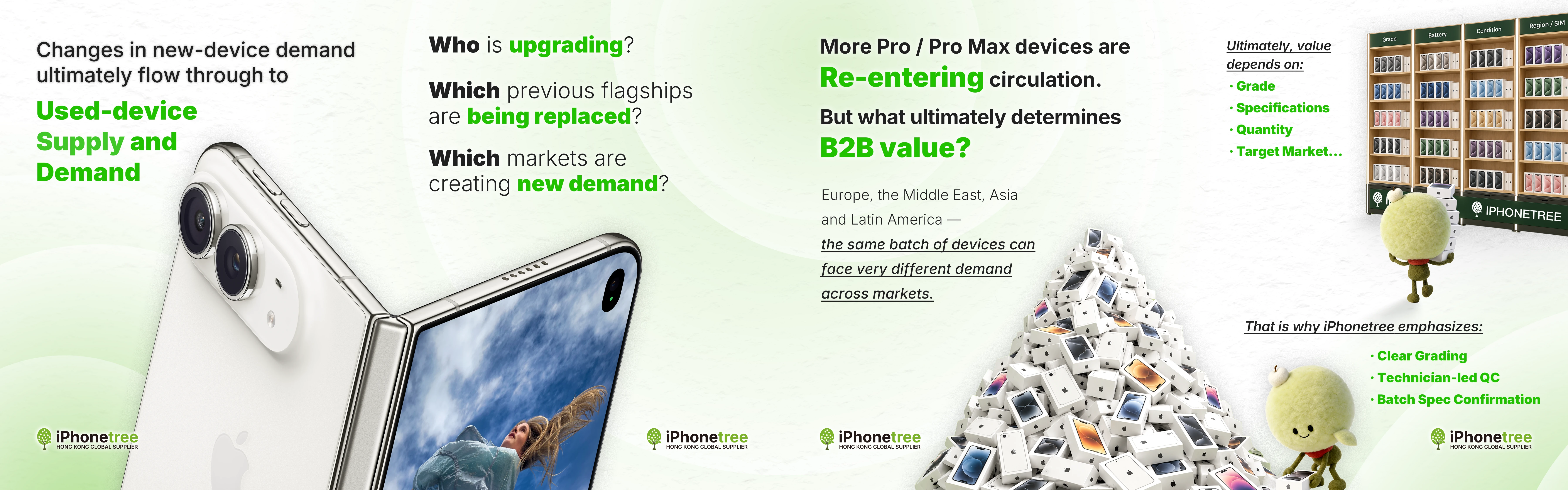
For iPhonetree, three questions matter more: Who is upgrading?
Which older flagship models are being replaced?
Which markets are creating new demand?
If premium users move from previous Pro or Pro Max models into Apple’s new lineup, those older flagship devices may gradually appear in greater numbers across the secondary market.
But supply is only half of the equation. The other half is real B2B demand.
A particular model may receive less consumer attention but remain highly liquid in a specific resale market. Another model may generate significant online interest while wholesale buyers remain cautious on price or specification.
That is why iPhonetree looks beyond launch-day headlines.
Serving professional B2B buyers across multiple international markets provides a different view of demand: not simply what people are talking about, but which models, grades, specifications and quantities buyers are actually looking for.
This is the market signal that matters.
If the new premium lineup drives another upgrade cycle, more previous-generation Pro and Pro Max devices may return to circulation.
More Pro / Pro Max Devices May Re-enter Circulation — But What Kind of Stock?
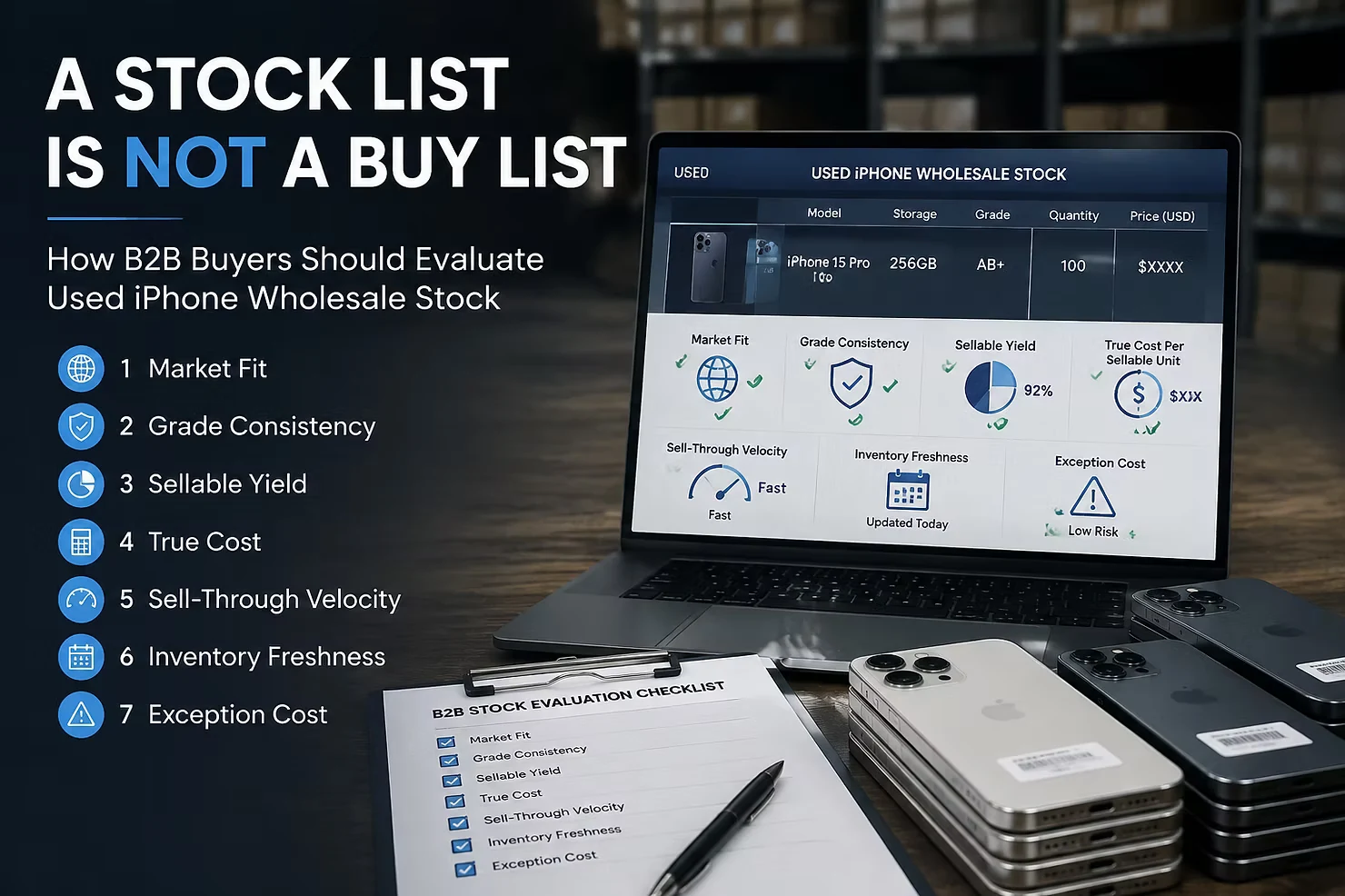
For used iPhone wholesalers, however, what ultimately matters is the structure of those devices after they return. More devices do not automatically mean better stock. Grade · Battery · Condition · Region / SIM · Sellable Yield
Two batches can contain exactly the same iPhone model and storage capacity, yet have very different commercial value.
One batch may contain a higher proportion of clean cosmetic grades. Another may have stronger battery condition. Regional versions and SIM configurations may differ.
Functional issues, repair histories and the proportion of devices that meet the buyer’s required specification can also change the economics of the batch.
That is why iPhonetree focuses on clear grading, technician-led quality control and batch-level specification confirmation.
The objective is not simply to have more devices available. It is to understand what those devices actually are — and how much of the batch is commercially suitable for the intended buyer.
This continues the same principle highlighted in iPhonetree’s pre-launch analysis: an increase in returned devices should not automatically be treated as an increase in high-quality supply.
Europe, the Middle East, Asia and Latin America — Different Markets, Different Demand
There is another reason why the impact of a new Apple launch cannot be reduced to a single global used-iPhone price. Different markets value the same batch differently.
A device that fits one destination market may be less attractive in another because of differences in grade, specification, battery expectations, region / SIM, quantity requirements and target resale price.
That means the commercial value of a used iPhone batch cannot be judged by model and price alone.
For B2B buyers, the more useful equation is:
Grade × Specification × Quantity × Target Market
iPhonetree’s current B2B positioning follows the same logic: professional buyers need to evaluate stock by product-specific specifications and destination-market suitability rather than treating available inventory as interchangeable.
The same 100 devices can represent very different opportunities depending on where and how they will ultimately be sold. That is why market fit matters.
What We’ll Be Watching Next
It is still too early to claim that iPhone Duo has already changed the used iPhone market. The device will not begin reaching customers until October 23, while iPhone 18 Pro and Pro Max availability starts September 18.
The more meaningful signals will emerge after devices begin reaching users and the next upgrade cycle develops.
At iPhonetree, we’ll be watching closely to see whether and how iPhone Duo and the new Pro lineup influence buyer demand, trade-in values, the grade mix and sellable yield of returned devices, and the wider premium used iPhone market.
Because in B2B, the story does not end when a new iPhone is sold.
Looking for Used Apple Devices for Your Market?
That is often where the next used-device cycle begins. iPhonetree supplies professional B2B buyers with tested and graded used Apple devices, supported by clear grading, technician-led QC and batch-level specifications. Share your target: Model · Grade · Specification · Quantity · Destination Market
View Current Stock → View Grading Standards → Contact iPhonetree
In this article
Need current stock?
Share your target models, grades and quantity with our Hong Kong team.
View Stock